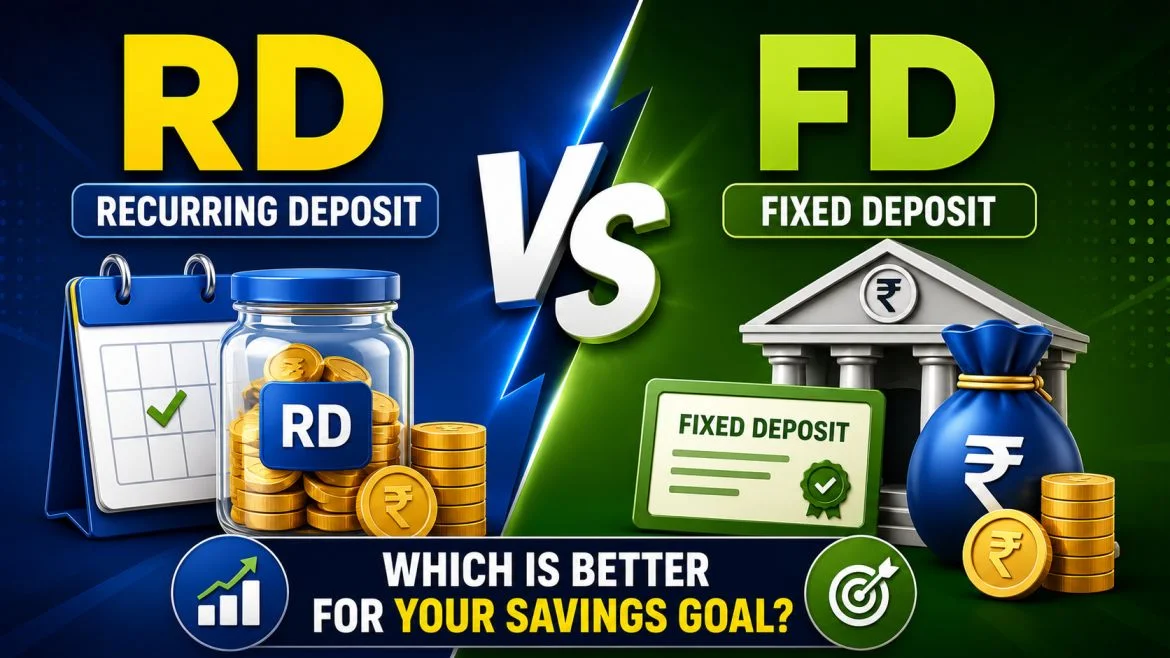
Understanding Fixed Deposits, Recurring Deposits, and Savings Accounts
Three Friends, Three Savings Goals
When Priya started her first job, she wanted a safe place to keep her salary while saving for everyday expenses. Her colleague Arjun was planning to buy a car in three years and wanted guaranteed returns on his savings. Meanwhile, their friend Meera dreamed of taking a postgraduate course abroad but found it difficult to save a large amount at once, so she decided to set aside a fixed sum every month.
Although all three wanted to grow their money safely, they chose different banking products. Priya opened a Savings Account for easy access to her money. Arjun invested in a Fixed Deposit (FD) to earn a fixed rate of interest over a set period. Meera started a Recurring Deposit (RD), allowing her to save regularly while earning interest on her monthly contributions.
Their choices demonstrate an important lesson in personal finance: there is no single savings product that suits everyone. The best option depends on your financial goals, time horizon, cash flow, and need for flexibility. Understanding how each product works can help you make smarter financial decisions and build a stronger financial future.
Why Understanding Savings Products Matters
Saving money is one of the foundations of financial wellbeing. Whether you’re building an emergency fund, saving for a major purchase, or planning for retirement, choosing the right banking product can help you protect your money while earning interest.
Fixed Deposits, Recurring Deposits, and Savings Accounts are among the most widely used banking products because they offer varying levels of safety, liquidity, and returns.
Understanding their differences enables you to:
- Match savings products to your financial goals.
- Balance accessibility with higher returns.
- Build disciplined saving habits.
- Reduce financial stress during emergencies.
- Grow your savings with confidence.
What the Research Says
Several leading financial organisations highlight the importance of formal savings and financial literacy:
- According to the World Bank’s Global Findex Database 2021, 76% of adults worldwide have an account with a bank, mobile money provider, or another regulated financial institution, reflecting significant progress in financial inclusion.
- The Organisation for Economic Co-operation and Development (OECD) states that financially literate individuals are more likely to develop healthy saving habits, plan for future expenses, and make informed financial decisions.
- The Reserve Bank of India (RBI) continues to encourage safe banking practices and promotes regulated deposit products as an important part of the country’s financial system.
These findings demonstrate that choosing suitable savings products plays an important role in achieving long-term financial stability.
What Is a Savings Account?
A Savings Account is a bank account designed for securely storing money while allowing easy access whenever funds are needed.
Most savings accounts offer:
- Interest on deposits
- ATM and debit card access
- Online and mobile banking
- UPI and digital payment integration
- Fund transfers
- Bill payment facilities
Advantages of a Savings Account
- High liquidity
- Easy access to money
- Suitable for emergency funds
- Supports everyday banking transactions
- Safe place to receive salary and other income
Limitations
- Generally offers lower interest rates than Fixed Deposits.
- Returns may not always keep pace with inflation.
- Not designed primarily for long-term wealth creation.
Savings accounts are ideal for short-term financial needs and emergency savings.
What Is a Fixed Deposit (FD)?
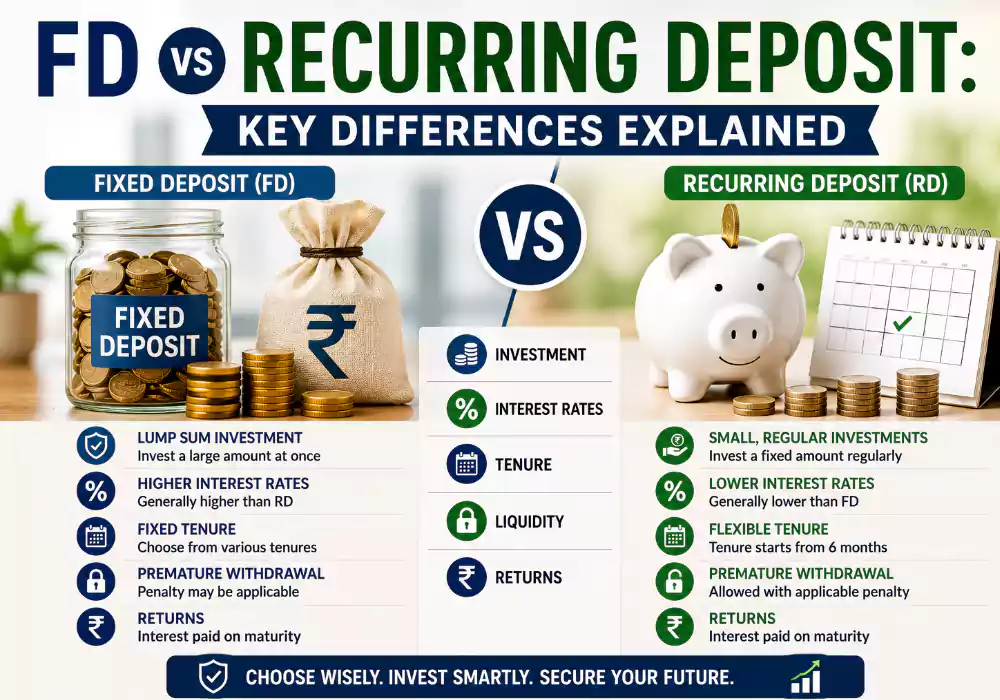
A Fixed Deposit (FD) is a savings product where you deposit a lump sum with a bank for a predetermined period at a fixed rate of interest.
The interest rate generally remains unchanged throughout the deposit term, providing predictable returns.
Common FD tenures range from a few months to several years.
Advantages of Fixed Deposits
- Guaranteed returns (subject to the bank’s terms and applicable regulations)
- Fixed interest rate throughout the tenure
- Low investment risk
- Suitable for medium- and long-term savings goals
- Helps preserve capital
Limitations
- Premature withdrawal may attract penalties.
- Funds are less accessible until maturity.
- Returns may be lower than some market-linked investments over the long term.
Fixed Deposits are suitable for individuals seeking stability and predictable income.
What Is a Recurring Deposit (RD)?
A Recurring Deposit (RD) allows customers to deposit a fixed amount every month for a chosen tenure while earning interest on those contributions.
Instead of investing a lump sum, RDs encourage regular saving through small monthly deposits.
Advantages of Recurring Deposits
- Encourages disciplined saving
- Suitable for salaried individuals
- Predictable maturity amount
- Low investment risk
- Helps achieve specific savings goals
Limitations
- Monthly contributions are mandatory.
- Premature closure may reduce returns.
- Offers less flexibility than a Savings Account.
Recurring Deposits are ideal for people who want to build savings gradually.
Fixed Deposit vs Recurring Deposit vs Savings Account
| Feature | Savings Account | Fixed Deposit | Recurring Deposit |
| Deposit Type | Flexible | One-time lump sum | Fixed monthly deposits |
| Accessibility | Very high | Limited until maturity | Limited during tenure |
| Interest Rate | Generally lower | Generally higher | Usually competitive and fixed |
| Best For | Daily banking and emergency funds | Medium- and long-term savings | Goal-based monthly saving |
| Risk Level | Very low | Very low | Very low |
| Flexibility | High | Moderate | Moderate |
Each product serves a different financial purpose, and many people benefit from using more than one.
Which Option Is Best for Different Financial Goals?
Choose a Savings Account If You:
- Need quick access to your money.
- Are building an emergency fund.
- Receive your salary through a bank.
- Make frequent transactions.
Choose a Fixed Deposit If You:
- Have a lump sum available to invest.
- Want predictable returns.
- Do not need immediate access to the funds.
- Prefer low-risk investments.
Choose a Recurring Deposit If You:
- Want to save every month.
- Have a regular income.
- Are planning for a future goal such as education, travel, or a vehicle purchase.
- Want to develop consistent saving habits.
Common Saving Mistakes to Avoid
Many people unknowingly reduce the effectiveness of their savings strategy by making avoidable mistakes:
- Keeping all savings in a low-interest account.
- Investing emergency funds in products with limited liquidity.
- Breaking Fixed Deposits unnecessarily.
- Missing Recurring Deposit instalments.
- Ignoring inflation when planning long-term savings.
- Choosing products without comparing interest rates and terms.
- Saving irregularly instead of following a consistent plan.
Avoiding these mistakes can help maximise both flexibility and long-term financial growth.
Practical Tips for Smarter Saving
To build a stronger financial foundation:
- Maintain an emergency fund in a Savings Account.
- Use Fixed Deposits for medium- or long-term financial goals.
- Start a Recurring Deposit for disciplined monthly saving.
- Compare interest rates before opening an account.
- Review your savings strategy annually.
- Diversify your financial plan according to your goals and risk tolerance.
A balanced approach often works better than relying on a single savings product.
How Our Blog Helps You Achieve Your Financial Goals
Personal finance can seem complicated when choosing between multiple banking products. Our blog simplifies these decisions by providing practical, evidence-based guidance tailored to everyday financial needs.
By following our articles, you’ll learn how to:
- Compare savings and investment products objectively.
- Build emergency funds effectively.
- Improve budgeting and cash flow management.
- Understand interest rates and inflation.
- Develop long-term saving habits.
- Avoid common banking mistakes.
- Improve financial literacy.
- Make informed financial decisions with confidence.
Our mission is to help readers transform financial knowledge into practical action that supports lasting financial security.
Saving Consistently Is More Important Than Saving Perfectly
Building financial security rarely depends on making one perfect decision. Instead, it comes from choosing the right financial products for your needs, saving consistently, and reviewing your progress over time. Whether you prefer the flexibility of a Savings Account, the guaranteed returns of a Fixed Deposit, or the disciplined approach of a Recurring Deposit, each option can play an important role in helping you achieve your financial goals.
Conclusion
Savings Accounts, Fixed Deposits, and Recurring Deposits each offer unique benefits, and understanding their differences allows you to choose the right product for every stage of your financial journey. While Savings Accounts provide liquidity for everyday needs, Fixed Deposits offer stable returns for lump-sum investments, and Recurring Deposits encourage disciplined monthly saving. By selecting the right combination of these banking products and maintaining consistent saving habits, you can build a stronger financial future with greater confidence. Our blog is dedicated to helping you navigate personal finance through trusted insights, practical advice, and evidence-based guidance that empowers you to achieve your financial goals. Which savings option best matches your financial ambitions today?
- World Bank. Global Findex Database 2021: https://www.worldbank.org/en/publication/globalfindex
- Organisation for Economic Co-operation and Development (OECD). Financial Education and Financial Literacy: https://www.oecd.org/finance/financial-education/
- Reserve Bank of India (RBI). Financial Education and Banking Information: https://www.rbi.org.in/