UPI vs Credit Cards vs Debit Cards: Which Should You Use?
Three Friends, Three Ways to Pay
It was a Saturday afternoon, and three friends—Aisha, Ben, and Chris—met for lunch after months apart. When the bill arrived, each reached for a different payment method. Aisha scanned the restaurant’s QR code using UPI and completed the payment in seconds. Ben used his credit card to earn cashback rewards while planning to pay the balance in full before the due date. Chris preferred his debit card because he only wanted to spend money already available in his bank account.
As they compared their choices, they realised there wasn’t a single “best” payment method. Each option had unique advantages depending on the situation. UPI offered unmatched convenience for instant transfers, credit cards provided rewards and short-term credit, while debit cards encouraged disciplined spending. The smartest financial decision wasn’t choosing one over the others—it was understanding when each payment method was most appropriate.
As digital payments become increasingly common, knowing the strengths and limitations of UPI, credit cards, and debit cards can help you manage your money more effectively and avoid unnecessary financial mistakes.
Understanding the Three Payment Methods
What Is UPI?
The Unified Payments Interface (UPI) is a real-time payment system developed by the National Payments Corporation of India (NPCI) that enables instant bank-to-bank transfers through mobile applications. Users can send or receive money using a Virtual Payment Address (VPA), QR code, mobile number, or bank account details without sharing sensitive banking information during every transaction.
What Is a Credit Card?
A credit card allows you to borrow money from a financial institution up to a pre-approved credit limit. You can repay the amount later, either in full or in instalments. Paying the full balance by the due date generally avoids interest charges, while unpaid balances may incur interest and fees.
What Is a Debit Card?
A debit card is directly linked to your bank account. Whenever you make a purchase, the amount is deducted immediately from your available account balance. Unlike credit cards, debit cards do not involve borrowing money.
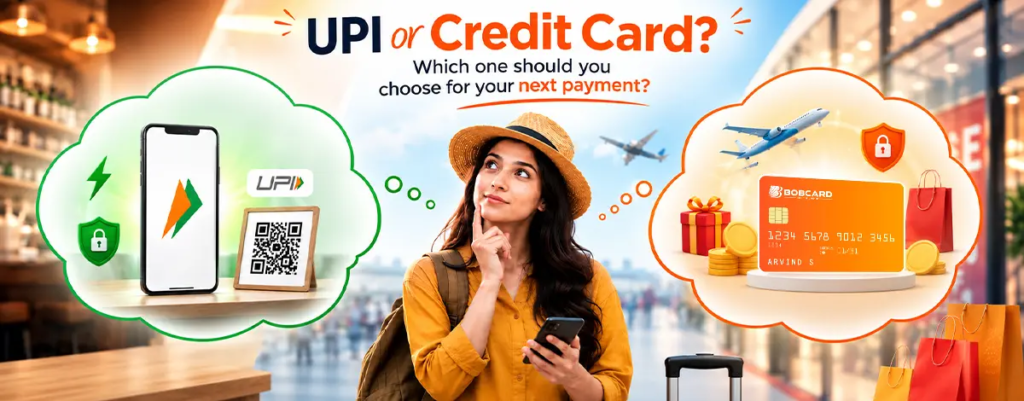
The Growth of Digital Payments
Digital payments continue to expand rapidly around the world.
- According to the National Payments Corporation of India (NPCI), UPI now processes billions of transactions every month, making it one of the world’s largest real-time retail payment systems.
- The Reserve Bank of India (RBI) has consistently reported strong year-on-year growth in digital payments, driven by mobile banking, UPI adoption, and increasing acceptance among businesses and consumers.
- The World Bank’s Global Findex Database 2021 found that digital payments are becoming increasingly common globally, with more adults using digital financial services for everyday transactions and financial inclusion.
These trends highlight how technology is transforming the way individuals and businesses handle payments.
Advantages of UPI
Fast and Convenient
UPI enables instant money transfers 24 hours a day, making it ideal for:
- Paying merchants
- Splitting restaurant bills
- Sending money to family and friends
- Utility bill payments
- Online shopping
No Need to Carry Cash
Most transactions can be completed with a smartphone, reducing reliance on physical cash.
Secure Authentication
UPI transactions are protected through secure authentication methods, including UPI PIN verification and bank-level security protocols.
Low-Cost Transactions
For most person-to-person and many merchant payments, UPI transactions are free for consumers, making it one of the most economical payment methods available.
Advantages of Credit Cards
Interest-Free Credit Period
Many credit cards provide an interest-free period if the full outstanding balance is paid before the payment due date.
Rewards and Cashback
Credit cards often offer:
- Cashback
- Reward points
- Airline miles
- Hotel benefits
- Purchase discounts
These rewards can provide additional value when used responsibly.
Builds Credit History
Responsible credit card usage, including timely repayments and maintaining low credit utilisation, may help build a positive credit history, which can improve eligibility for future loans.
Strong Consumer Protection
Many credit card issuers provide fraud protection and dispute resolution mechanisms that offer additional security for cardholders.
Advantages of Debit Cards
Encourages Responsible Spending
Because purchases are deducted directly from your bank account, debit cards reduce the risk of accumulating debt.
Easy to Use
Debit cards are accepted at millions of merchants, ATMs, and online retailers worldwide.
No Interest Charges
Since you are spending your own money rather than borrowing, debit cards do not incur interest charges on purchases.
Helpful for Budgeting
Debit cards naturally support budgeting because spending is limited to the funds available in your account.
Which Payment Method Should You Choose?
Choose UPI If You:
- Make frequent everyday payments.
- Need instant money transfers.
- Regularly scan QR codes.
- Prefer simple mobile payments.
- Want low-cost digital transactions.
Choose a Credit Card If You:
- Always pay your balance in full.
- Want cashback or travel rewards.
- Need short-term payment flexibility.
- Frequently shop online or travel internationally.
- Want to build a positive credit history.
Choose a Debit Card If You:
- Prefer spending only available funds.
- Want to avoid debt.
- Follow a strict monthly budget.
- Need straightforward access to your bank account.
For many people, using all three payment methods strategically provides the greatest flexibility.
Common Mistakes to Avoid
Regardless of which payment method you use, avoid these common financial mistakes:
- Paying only the minimum amount due on credit cards.
- Sharing your UPI PIN, OTP, or card PIN with anyone.
- Ignoring transaction alerts.
- Spending beyond your monthly budget.
- Saving card details on untrusted websites.
- Using unsecured public Wi-Fi for financial transactions.
- Failing to monitor account statements regularly.
Good financial habits are just as important as choosing the right payment method.
How Our Blog Helps You Make Smarter Financial Decisions
The world of digital finance is evolving rapidly, and understanding payment methods is essential for managing money effectively. Our blog provides practical, evidence-based guidance that simplifies personal finance and helps readers make informed financial decisions.
By following our articles, you’ll learn how to:
- Choose the right financial products.
- Improve budgeting and money management.
- Understand credit scores and responsible borrowing.
- Stay safe from digital payment fraud.
- Compare banking and payment options objectively.
- Build healthy financial habits.
- Improve financial literacy.
- Achieve long-term financial goals with confidence.
Our mission is to help readers navigate modern finance with trusted information, practical strategies, and educational content that supports smarter financial decisions.
The Best Payment Method Depends on the Situation
There is no single payment method that is ideal for every purchase. UPI offers exceptional convenience for daily transactions, credit cards provide valuable rewards and financial flexibility when used responsibly, and debit cards encourage disciplined spending without creating debt. Understanding the strengths of each option enables you to choose the most appropriate payment method based on your financial goals, spending habits, and lifestyle.
Conclusion
UPI, credit cards, and debit cards each play an important role in today’s digital economy. Rather than asking which payment method is universally better, the more useful question is which one best fits a particular financial need. By understanding how each option works, using them responsibly, and maintaining good financial habits, you can improve your financial security and make more confident money decisions. Our blog is dedicated to helping you master personal finance through trusted insights, practical guidance, and evidence-based education that empowers you to achieve your financial goals, so which payment method will you choose the next time you make a purchase?
- National Payments Corporation of India (NPCI). UPI Product Statistics: https://www.npci.org.in/what-we-do/upi/product-statistics
- Reserve Bank of India (RBI). Annual Report and Payment System Indicators: https://www.rbi.org.in/
- World Bank. Global Findex Database 2021: https://www.worldbank.org/en/publication/globalfindex