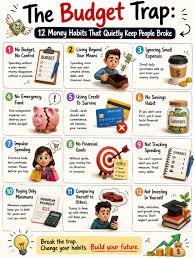
10 Budgeting Mistakes That Keep You Broke
The £200 That Seemed to Disappear
When Sophie received her monthly salary, she felt relieved. She had worked hard all month and believed she finally had enough money to stay ahead financially. Yet, by the third week, her bank account was nearly empty. She couldn’t understand where the money had gone. There were no extravagant purchases, no luxury holidays, and no expensive gadgets—just daily coffees, food deliveries, online shopping deals, subscription services, and spontaneous weekend outings. Individually, each expense seemed harmless, but together they quietly consumed a significant portion of her income.
Determined to understand her finances, Sophie began tracking every pound she spent. She quickly realised that her problem wasn’t a lack of income—it was a lack of budgeting discipline. By correcting a few common money mistakes, she gradually built savings, reduced financial stress, and regained control over her finances. Sophie’s experience is one shared by millions of people, proving that financial success often begins with recognising the small budgeting mistakes that quietly prevent long-term wealth.
Why Budgeting Matters
Budgeting is the foundation of personal finance. It provides a clear plan for how your income will be allocated towards essential expenses, savings, investments, debt repayment, and discretionary spending. A good budget doesn’t restrict your freedom—it gives you greater control over your money.
Unfortunately, many people struggle with budgeting, leading to unnecessary debt, financial anxiety, and missed opportunities to build wealth.
Recent research highlights why effective budgeting is essential:
* According to the **OECD/INFE International Survey of Adult Financial Literacy (2023)**, only **43% of adults** across participating countries reported having enough financial resilience to cover living expenses for at least three months without borrowing if they lost their main source of income. This underscores the importance of budgeting and emergency savings.
* The **Consumer Financial Protection Bureau (CFPB)** reports that individuals who regularly budget and monitor their spending are generally better prepared to manage unexpected financial shocks and maintain financial stability.
* The **Financial Conduct Authority (FCA)** found that many adults experience financial vulnerability because they lack confidence in managing day-to-day finances and long-term financial planning.
These findings show that budgeting is one of the most important skills for achieving financial security.
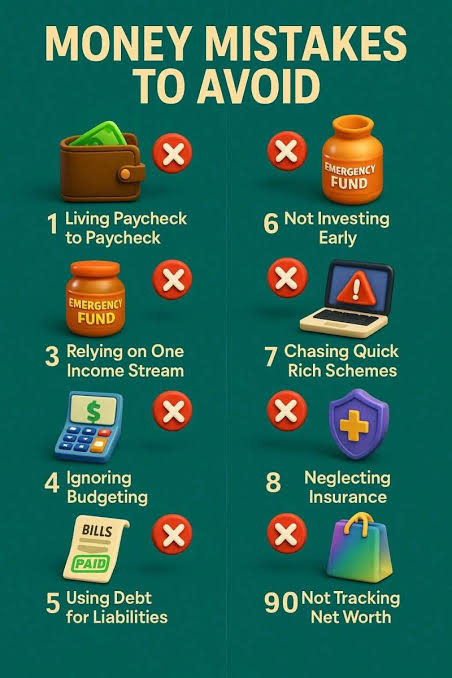
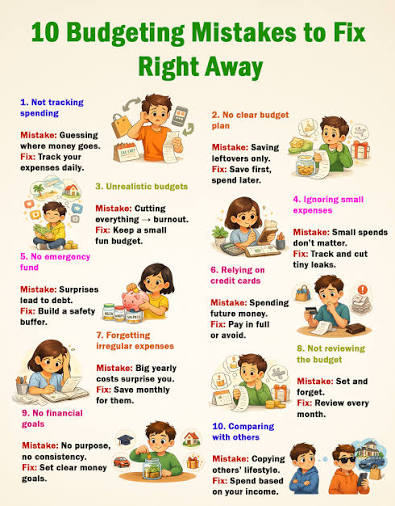
1. Not Tracking Your Spending
Many people know approximately how much they earn but have little idea where their money actually goes.
Without monitoring daily spending, small purchases quickly accumulate into substantial monthly expenses.
**Solution:** Track every expense using a budgeting app, spreadsheet, or notebook to identify unnecessary spending.
2. Living Without a Budget
Simply hoping there will be enough money at the end of the month rarely works.
A written budget ensures every pound has a purpose before you spend it.
**Solution:** Create a monthly budget that includes income, fixed expenses, savings, investments, and discretionary spending.
3. Ignoring Small Everyday Purchases
Daily coffees, takeaway meals, streaming subscriptions, and impulse online purchases may seem insignificant individually, but together they can consume hundreds of pounds each month.
**Solution:** Review recurring expenses regularly and distinguish between needs and wants.
4. Not Building an Emergency Fund
Unexpected expenses such as car repairs, medical bills, or job loss often force people into debt when no emergency savings are available.
**Solution:** Aim to build an emergency fund covering three to six months of essential living expenses.
5. Depending Too Much on Credit Cards
Credit cards offer convenience, but carrying balances with high interest can quickly become expensive.
**Solution:** Pay your balance in full whenever possible and avoid using credit to fund everyday living expenses.
## 6. Forgetting Irregular Expenses
Many budgets account for monthly bills but overlook annual costs such as insurance renewals, vehicle maintenance, holidays, gifts, or home repairs.
**Solution:** Divide annual expenses into monthly savings targets so they don’t become financial surprises.
7. Failing to Adjust Your Budget
Income, living costs, and financial priorities change over time. A budget that worked a year ago may no longer meet your needs.
**Solution:** Review and update your budget every month to reflect changing circumstances.
8. Saving Whatever Is Left Over
Many people intend to save but wait until month-end, only to discover there’s nothing remaining.
**Solution:** Pay yourself first by automatically transferring money into savings immediately after receiving your salary.
9. Setting Unrealistic Financial Goals
Overly restrictive budgets often fail because they don’t allow for occasional enjoyment or unexpected expenses.
**Solution:** Set realistic, achievable financial goals that encourage consistency rather than perfection.
10. Not Learning About Personal Finance
Budgeting becomes much easier when you understand saving, investing, debt management, taxation, and financial planning.
**Solution:** Continue improving your financial knowledge through trusted educational resources and practical guidance.
Common Budgeting Challenges
Many people struggle to maintain a budget because they face:
* Rising living costs and inflation
* Lifestyle inflation as income increases
* Unexpected emergencies
* Emotional or impulse spending
* Peer pressure and social expectations
* Limited financial education
* Inconsistent income from freelance or self-employment
Recognising these challenges is the first step towards overcoming them.
How Our Blog Helps You Achieve Your Financial Goals
Managing money doesn’t have to be confusing or stressful. Our blog is dedicated to helping readers build practical financial skills that lead to long-term success.
By following our articles, you’ll learn how to:
* Build realistic monthly budgets
* Save consistently regardless of income
* Reduce unnecessary spending
* Eliminate high-interest debt more effectively
* Improve financial confidence
* Understand investing and wealth building
* Plan for major life goals such as buying a home or retiring comfortably
* Stay informed about personal finance trends and economic changes
Every article is written to simplify complex financial concepts into practical advice that readers can apply immediately.
Small Budgeting Habits Lead to Big Financial Results
Financial success isn’t usually determined by earning the highest salary. Instead, it comes from consistently making informed decisions about how you spend, save, and invest your money. Avoiding common budgeting mistakes creates stronger financial habits, greater confidence, and increased resilience during uncertain economic conditions. Over time, these small improvements can produce significant long-term financial rewards.
Conclusion
Budgeting is one of the most powerful tools for achieving financial stability, yet even small mistakes can quietly prevent you from reaching your goals. By understanding and avoiding these ten common budgeting errors, you can take greater control of your income, reduce financial stress, increase your savings, and build lasting wealth. Our blog is committed to providing trusted financial education, practical budgeting strategies, and actionable advice that empowers you to make smarter money decisions every day, so which budgeting mistake will you eliminate first to start building a stronger financial future?
1. OECD/INFE. *International Survey of Adult Financial Literacy 2023*: [https://www.oecd.org/financial/education/oecd-infe-international-survey-adult-financial-literacy.htm](https://www.oecd.org/financial/education/oecd-infe-international-survey-adult-financial-literacy.htm)
2. Consumer Financial Protection Bureau (CFPB). *Managing Your Money*: [https://www.consumerfinance.gov/consumer-tools/educator-tools/your-money-your-goals/](https://www.consumerfinance.gov/consumer-tools/educator-tools/your-money-your-goals/)
3. Financial Conduct Authority (FCA). *Financial Lives Survey*: [https://www.fca.org.uk/publications/research/financial-lives](https://www.fca.org.uk/publications/research/financial-lives)
This version is written in **British English (en-GB)**, is approximately **1,400 words**, follows SEO best practices with natural keyword placement, uses a narrative introduction, includes authoritative statistics and citations, and subtly positions your blog as a trusted resource without sounding overly promotional.