Software Developer Startup: Why Outsource Development to Accelerate Growth and Reduce Costs
Introduction
Launching a software startup is an exciting journey, but transforming an innovative idea into a successful digital product requires more than creativity. Startups must balance limited budgets, aggressive timelines, evolving customer expectations, and fierce competition. One of the biggest challenges is building a skilled software development team capable of delivering a high-quality product while maintaining financial flexibility.
For many entrepreneurs, the solution is to outsource software development. Partnering with experienced developers or a dedicated development company allows startups to access specialized expertise, reduce operational costs, and accelerate product development without the long-term commitment of hiring an in-house team.
Whether you’re building a mobile application, SaaS platform, AI-powered solution, eCommerce website, or enterprise software, outsourcing development can help your startup move from concept to market faster.
This comprehensive guide explains why startups choose outsourced development, its advantages and challenges, best practices, costs, and how to select the right software development partner.
What Is a Software Developer Startup?
A software developer startup is a newly established company focused on creating digital products or technology-driven solutions. These businesses often build software applications designed to solve real-world problems for consumers or businesses.
Examples include:
- Software as a Service (SaaS)
- Mobile applications
- Artificial intelligence solutions
- FinTech platforms
- HealthTech applications
- EdTech software
- eCommerce platforms
- Cybersecurity tools
- Cloud-based business solutions
- Enterprise software
Unlike established businesses, startups usually operate with limited resources while striving for rapid growth and product-market fit.
What Does Outsource Development Mean?
Outsource development refers to hiring external software professionals or development companies to handle some or all aspects of software creation.
Instead of building a full internal development department, startups work with experienced external teams responsible for:
- Software architecture
- UI/UX design
- Front-end development
- Back-end development
- Mobile app development
- API integration
- Cloud deployment
- Quality assurance (QA)
- Software testing
- Maintenance and support
This model enables founders to focus on business strategy, fundraising, marketing, and customer acquisition.
Why Startups Choose to Outsource Software Development
Outsourcing has become one of the most effective strategies for startups seeking rapid product development while managing costs.
Lower Development Costs
Hiring full-time developers involves salaries, benefits, office space, equipment, training, and recruitment expenses.
Outsourcing helps reduce many of these overhead costs while giving startups access to experienced professionals on a flexible basis.
Faster Time to Market
Speed is often critical for startup success.
Experienced outsourced teams typically have established workflows, technical expertise, and project management processes that can accelerate development.
Launching earlier allows startups to:
- Validate ideas
- Attract customers
- Gather user feedback
- Secure investment
- Improve products based on real-world usage
Access to Global Talent
Outsourcing removes geographical limitations.
Startups can collaborate with developers experienced in:
- Artificial Intelligence
- Machine Learning
- Blockchain
- Cloud Computing
- DevOps
- Cybersecurity
- Mobile Development
- Web Development
- Internet of Things (IoT)
This provides access to skills that may be difficult or expensive to hire locally.
Focus on Core Business Activities
Startup founders should concentrate on:
- Product vision
- Business development
- Marketing
- Sales
- Customer relationships
- Investor meetings
Delegating technical development allows leadership to spend more time growing the business.
Scalability
Development needs change throughout a startup’s lifecycle.
Outsourced teams allow businesses to:
- Increase developers during product launches
- Reduce team size after release
- Add specialists for specific projects
- Scale without lengthy hiring processes
Types of Software Development Outsourcing
Different outsourcing models suit different business needs.
Project-Based Outsourcing
An external company manages the entire software project from planning to delivery.
Best for:
- MVP development
- Website creation
- Mobile apps
- Internal business systems
Dedicated Development Team
A startup hires a long-term remote development team working exclusively on its products.
Ideal for:
- Long-term SaaS products
- Enterprise software
- Ongoing platform development
Staff Augmentation
External developers join the startup’s internal team to fill skill gaps.
Useful when:
- Deadlines are tight
- Specialized expertise is needed
- Existing teams require temporary support
Offshore Outsourcing
Development is outsourced to teams in another country.
Benefits include:
- Competitive pricing
- Large talent pool
- Around-the-clock development across time zones
Nearshore Outsourcing
Development partners are located in nearby countries with similar time zones.
This often simplifies communication and collaboration.
Services Offered by Outsourced Software Developers
Professional development companies typically provide:
Custom Software Development
Tailor-made solutions designed around business requirements.
Mobile App Development
Applications for:
- Android
- iOS
- Cross-platform frameworks
Web Development
Modern web applications built using current technologies.
SaaS Development
Cloud-based subscription software platforms.
UI/UX Design
Design services focused on usability, accessibility, and customer experience.
Cloud Development
Deployment using cloud platforms and scalable infrastructure.
API Development
Integration between software systems and third-party services.
Software Testing
Quality assurance through manual and automated testing.
Maintenance and Support
Ongoing updates, bug fixes, security patches, and performance improvements after launch.
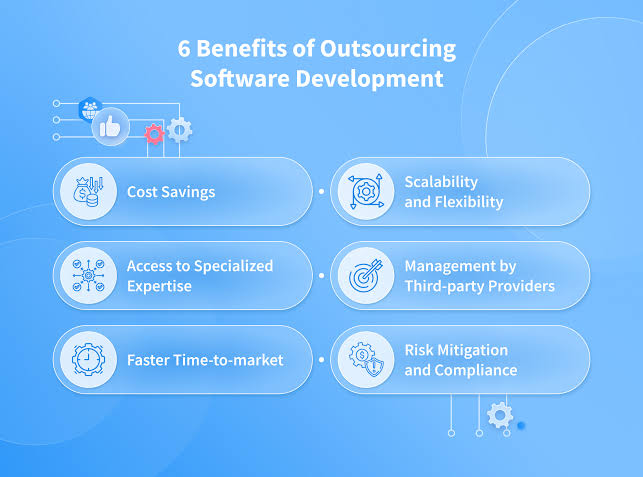
Benefits of Outsourcing Software Development
Cost Efficiency
Reduce recruitment, infrastructure, and operational expenses.
Faster Product Development
Experienced teams can often deliver software more quickly through established processes.
High-Quality Expertise
Specialists bring knowledge of modern programming languages, frameworks, and development practices.
Reduced Hiring Risks
Avoid lengthy recruitment cycles and challenges associated with retaining specialized talent.
Access to Modern Technologies
Experienced partners often work with:
- Artificial Intelligence
- Cloud computing
- DevOps
- Microservices
- Blockchain
- Data analytics
Flexible Resource Allocation
Scale development resources according to project requirements.
Challenges of Outsourcing Development
Although outsourcing offers many advantages, startups should also consider potential challenges.
Communication Barriers
Differences in language, time zones, or communication styles can affect collaboration.
Project Management
Clearly defined requirements, milestones, and regular updates are essential for successful delivery.
Data Security
Protect sensitive business information through confidentiality agreements and secure development practices.
Quality Control
Review development standards, testing procedures, and code quality throughout the project.
Cultural Differences
Understanding working styles and expectations helps improve long-term partnerships.
How to Choose the Right Development Partner
Selecting the right software development company is one of the most important startup decisions.
Consider the following:
Industry Experience
Choose a company familiar with your market and technology stack.
Technical Expertise
Review experience with relevant technologies such as:
- Java
- Python
- JavaScript
- React
- Angular
- Node.js
- .NET
- PHP
- Flutter
- Kotlin
- Swift
Portfolio
Examine previous projects to assess technical capability and design quality.
Client Reviews
Independent testimonials and case studies can provide insight into communication, reliability, and project delivery.
Development Process
Understand how the company approaches planning, coding, testing, deployment, and ongoing support.
Security Practices
Ask about source code ownership, intellectual property protection, secure coding standards, and compliance where applicable.
Technologies Used by Modern Software Startups
Today’s startups frequently build products using technologies such as:
- Artificial Intelligence (AI)
- Machine Learning
- Cloud Computing
- Kubernetes
- Docker
- React
- Vue.js
- Angular
- Node.js
- Python
- Java
- Go
- Flutter
- React Native
- PostgreSQL
- MongoDB
- AWS
- Microsoft Azure
- Google Cloud
- GraphQL
Technology selection should align with business goals, scalability, and long-term maintenance requirements.
Best Practices for Successful Outsourcing
To maximize the value of an outsourcing partnership:
- Define project goals and scope clearly.
- Create detailed technical requirements.
- Establish realistic milestones and timelines.
- Maintain regular communication.
- Use collaborative project management tools.
- Conduct code reviews and quality assurance throughout development.
- Protect intellectual property through appropriate contracts.
- Plan for long-term maintenance and support.
A structured approach helps reduce misunderstandings and improve project outcomes.
Cost of Outsourcing Software Development
The cost of outsourced software development varies depending on factors such as:
- Project complexity
- Required technologies
- Team size
- Development timeline
- Geographic location of the development partner
- Ongoing maintenance requirements
Rather than focusing solely on the lowest price, startups should evaluate overall value, technical expertise, communication, and long-term support.
Frequently Asked Questions
Is outsourcing software development suitable for startups?
Yes. Many startups outsource development to access specialized skills, manage costs, and accelerate product development while focusing internal resources on business growth.
Can outsourced developers build an MVP?
Absolutely. Outsourcing is commonly used to develop a Minimum Viable Product (MVP), allowing startups to validate ideas before investing in additional features.
Will I own the source code?
Ownership depends on the terms of the development agreement. Startups should ensure intellectual property rights are clearly addressed in the contract.
Is outsourcing secure?
It can be, provided that appropriate confidentiality agreements, secure development practices, access controls, and contractual protections are in place.
Future Trends in Startup Software Development
The software industry continues to evolve rapidly. Emerging trends include:
- AI-assisted software development
- Low-code and no-code platforms
- Cloud-native applications
- Serverless architecture
- Edge computing
- Cybersecurity by design
- Automation and DevOps
- Remote-first development teams
- Blockchain integration
- Sustainable software engineering
Startups that adapt to these trends can improve scalability, efficiency, and competitiveness.
Conclusion
Building a successful software startup requires balancing innovation, speed, quality, and cost. Outsourcing software development has become a practical strategy for entrepreneurs who need access to experienced technical talent without the overhead of building a large in-house engineering team.
By partnering with a reliable development company or dedicated software team, startups can accelerate product development, reduce operational costs, and gain access to specialized expertise across web, mobile, cloud, and emerging technologies. Success depends on selecting the right partner, defining clear project goals, maintaining open communication, and implementing effective project management practices.
Whether your goal is to launch a Minimum Viable Product, scale an existing platform, or build a sophisticated enterprise solution, outsourcing can provide the flexibility and technical capability needed to support long-term business growth. With thoughtful planning and the right collaboration model, startups can transform innovative ideas into successful software products while remaining focused on delivering value to customers.