
Corporate Finance Explained: Capital Structure and Funding Decisions
The Expansion That Needed More Than a Great Idea
When Emma founded her small manufacturing company, success came faster than she had imagined. Within a few years, customer demand had doubled, and retailers across the country wanted to stock her products. To meet this growing demand, she needed a larger production facility, advanced machinery, and additional employees. However, there was one challenge—expansion required substantial capital.
Her accountant presented two options. The first was to borrow money from a bank, allowing her to retain full ownership while committing to regular loan repayments. The second was to invite outside investors to contribute capital in exchange for a share of the business. Both options had advantages and disadvantages, and the decision would influence the company’s future for years to come.
Emma soon discovered that every successful business faces similar questions. How should a company raise money? How much debt is too much? When is issuing equity a better choice? These questions lie at the heart of corporate finance and are collectively known as capital structure and funding decisions. Understanding these concepts helps investors, entrepreneurs, managers, and finance professionals make informed decisions that support sustainable business growth.
What Is Corporate Finance?
Corporate finance is the branch of finance that focuses on how businesses raise, manage, and allocate capital to maximise shareholder value while maintaining financial stability.
Its primary objectives include:
- Funding business operations.
- Supporting long-term growth.
- Managing financial risk.
- Optimising capital allocation.
- Improving profitability.
- Maximising shareholder wealth.
Corporate finance guides decisions that affect every stage of a company’s lifecycle, from launching a start-up to expanding into international markets.
What Is Capital Structure?
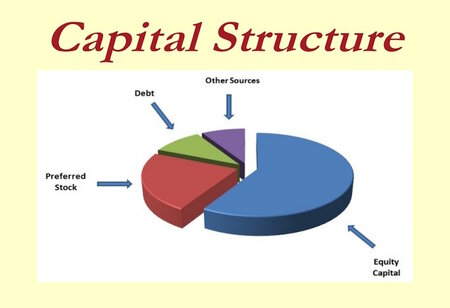
Capital structure refers to the combination of debt and equity a company uses to finance its operations and investments.
The two primary sources of business funding are:
Equity Financing
Equity financing involves raising money by selling ownership shares in the business.
Examples include:
- Ordinary shares
- Preference shares
- Venture capital
- Private equity
- Initial Public Offerings (IPOs)
Equity does not usually require regular repayments, but it dilutes ownership and may reduce existing shareholders’ control.
Debt Financing
Debt financing involves borrowing funds that must be repaid according to agreed terms.
Examples include:
- Bank loans
- Corporate bonds
- Working capital loans
- Commercial paper
- Equipment financing
Debt allows owners to retain control but creates repayment obligations and interest expenses.
Why Capital Structure Matters
A company’s funding decisions affect nearly every aspect of its financial performance.
An effective capital structure can help:
- Lower the overall cost of capital.
- Improve profitability.
- Support business expansion.
- Maintain financial flexibility.
- Increase investor confidence.
- Strengthen long-term financial stability.
Poor funding decisions, however, may increase financial risk and reduce business resilience during economic downturns.
What the Research Says
Leading global organisations have highlighted the importance of sound corporate finance and capital allocation:
- According to the Organisation for Economic Co-operation and Development (OECD), well-functioning capital markets enable businesses to raise long-term financing, support innovation, and contribute to sustainable economic growth.
- The World Bank reports that access to finance remains one of the most important drivers of private sector development, business expansion, and job creation worldwide.
- The International Monetary Fund (IMF) emphasises that strong corporate balance sheets and prudent financing decisions improve economic resilience during periods of financial uncertainty.
These findings demonstrate that effective funding strategies benefit not only individual businesses but also broader economic development.
Understanding Funding Decisions
Funding decisions determine how businesses obtain the financial resources needed for operations and growth.
These decisions often include:
- Financing new projects.
- Purchasing equipment.
- Expanding production capacity.
- Acquiring other businesses.
- Entering new markets.
- Supporting research and development.
- Managing working capital.
Choosing the right funding source depends on the company’s objectives, financial condition, and risk tolerance.
Factors That Influence Capital Structure
1. Cost of Capital
Businesses seek financing that minimises their overall cost of raising funds while supporting long-term growth.
Lower financing costs can improve profitability and shareholder returns.
2. Business Risk
Companies operating in volatile industries often maintain more conservative debt levels to reduce financial pressure during downturns.
3. Cash Flow Stability
Businesses with predictable cash flows are generally better positioned to manage regular debt repayments.
4. Growth Opportunities
Rapidly expanding companies may require significant external funding to finance future investments.
5. Interest Rates
Borrowing costs influence whether debt financing is attractive compared with raising equity.
Higher interest rates often increase the cost of debt.
6. Market Conditions
Investor confidence, stock market performance, and economic conditions affect the availability and attractiveness of different funding options.
Debt vs Equity: A Comparison
| Feature | Debt Financing | Equity Financing |
| Ownership | No ownership dilution | Ownership is shared with investors |
| Repayment | Fixed repayment obligations | No mandatory repayment |
| Interest Cost | Interest payments required | No interest expense |
| Financial Risk | Higher if debt becomes excessive | Lower repayment risk |
| Control | Owners retain control | Investors gain ownership rights |
| Best Suited For | Stable cash-generating businesses | High-growth businesses seeking expansion capital |
Most successful companies use a combination of both debt and equity rather than relying exclusively on one source.
The Importance of the Cost of Capital
The cost of capital represents the expected return required by lenders and investors.
Businesses compare the expected return from an investment project with the cost of obtaining the necessary funding.
Projects that generate returns exceeding the cost of capital are generally considered more attractive because they create value for shareholders.
Common Corporate Finance Strategies
Successful businesses often apply several financing strategies.
Maintain a Balanced Capital Structure
Combining debt and equity helps reduce reliance on a single funding source.
Preserve Financial Flexibility
Maintaining borrowing capacity allows businesses to respond to unexpected opportunities or challenges.
Diversify Funding Sources
Companies often combine:
- Bank loans
- Bonds
- Equity financing
- Retained earnings
- Private investment
Diversification reduces dependence on any single source of finance.
Review Financing Regularly
Capital structures should evolve as businesses grow, market conditions change, and financing costs fluctuate.
Common Mistakes Businesses Make
Many organisations encounter financial difficulties because they:
- Borrow more than they can comfortably repay.
- Ignore changing interest rates.
- Depend entirely on one funding source.
- Raise equity unnecessarily, diluting ownership.
- Fail to forecast future cash flows accurately.
- Delay refinancing when market conditions improve.
Careful planning helps businesses avoid these costly mistakes.
Practical Tips for Finance Professionals and Business Owners
To improve funding decisions:
- Analyse cash flow before borrowing.
- Compare multiple financing options.
- Maintain appropriate debt levels.
- Diversify funding sources.
- Review financial ratios regularly.
- Monitor economic conditions and interest rates.
- Align funding decisions with long-term business objectives.
Strong corporate finance requires balancing growth opportunities with prudent risk management.
How Our Blog Helps You Achieve Your Financial Goals
Corporate finance concepts can appear complex, but understanding them benefits investors, entrepreneurs, finance students, and business professionals alike. Our blog simplifies advanced financial topics into practical, evidence-based guidance that readers can apply with confidence.
By following our articles, you’ll learn how to:
- Understand business finance fundamentals.
- Analyse company financial decisions.
- Compare debt and equity financing.
- Improve investment knowledge.
- Understand financial statements and corporate strategy.
- Stay informed about economic and market developments.
- Avoid common financial misconceptions.
- Build stronger financial literacy for both personal and professional success.
Our mission is to empower readers with reliable financial education that supports informed decision-making and long-term financial growth.
Smart Funding Decisions Drive Sustainable Business Growth
Every successful business eventually faces decisions about how to finance its ambitions. Choosing the right balance between debt and equity is not simply an accounting exercise—it is a strategic decision that influences profitability, financial resilience, investor confidence, and future growth. Companies that carefully evaluate their capital structure, manage financial risk, and align funding with long-term objectives are generally better positioned to navigate changing economic conditions and create lasting value.
Conclusion
Corporate finance is the foundation of strategic business decision-making, and capital structure plays a central role in determining how organisations fund growth, manage risk, and maximise shareholder value. By understanding the differences between debt and equity financing, evaluating the cost of capital, and making informed funding decisions, businesses can strengthen their financial position and pursue sustainable expansion with greater confidence. Our blog is committed to helping readers simplify complex financial concepts through trusted insights, practical guidance, and evidence-based education that supports smarter financial decisions, so are you ready to understand how the right funding strategy can shape a company’s long-term success?
- Organisation for Economic Co-operation and Development (OECD). Corporate Bond Markets and Corporate Financing and related corporate finance resources: https://www.oecd.org/finance/
- World Bank. Finance, Competitiveness and Innovation: https://www.worldbank.org/en/topic/financialsector
- International Monetary Fund (IMF). Global Financial Stability Report and corporate sector research: https://www.imf.org/