Tax Planning Strategies for Salaried Professionals
The Salary Raise That Didn’t Feel Like One
When Neha received a promotion at work, she couldn’t wait to see her first higher salary credited to her bank account. She had already planned how she would use the extra income—building an emergency fund, investing for retirement, and taking a family holiday. However, when payday arrived, she noticed that her take-home pay was much lower than she had expected because of higher tax deductions.
Initially disappointed, Neha assumed there was nothing she could do. But after attending a financial literacy workshop and learning about legitimate tax planning strategies, she realised that effective tax planning isn’t about avoiding taxes—it’s about understanding the tax laws, claiming eligible deductions, choosing suitable investment options, and organising finances throughout the year. By planning ahead instead of waiting until the end of the financial year, she reduced her tax liability legally while increasing her savings and investments.
Like Neha, many salaried professionals work hard to earn more but overlook opportunities to manage their taxes efficiently. With the right knowledge, tax planning can become an important part of building long-term financial security.
What Is Tax Planning?
Tax planning is the process of organising your finances in a lawful and efficient way to minimise your tax liability while complying fully with tax regulations. It involves understanding available deductions, exemptions (where applicable), investment opportunities, and tax-saving provisions under the applicable tax regime.
It is important to distinguish tax planning from tax evasion:
- Tax planning uses legal provisions to reduce tax liability.
- Tax evasion involves illegally hiding income or providing false information and can result in penalties or prosecution.
Good tax planning supports broader financial goals by improving cash flow, increasing savings, and encouraging disciplined investing.
Why Tax Planning Matters
For salaried professionals, income tax is often one of the largest annual financial obligations. Planning taxes proactively can help you:
- Increase your take-home savings.
- Build long-term wealth through tax-efficient investments.
- Improve retirement planning.
- Reduce financial stress during tax season.
- Stay compliant with tax laws.
- Achieve financial goals more efficiently.
Rather than viewing tax planning as a once-a-year activity, it should form part of an overall financial plan.
What the Research Says
Several respected organisations highlight the importance of financial literacy and responsible tax compliance:
- According to the Organisation for Economic Co-operation and Development (OECD), individuals with stronger financial literacy are generally better at budgeting, saving, planning for the future, and making informed financial decisions.
- The Income Tax Department of India continues to encourage voluntary tax compliance through digital filing systems, simplified return filing, and taxpayer education initiatives.
- The World Bank has consistently noted that efficient tax administration and digital public services contribute to stronger economic development and improved public trust.
These findings demonstrate that understanding taxation is not only beneficial for individuals but also contributes to a stronger financial system.
Key Tax Planning Strategies for Salaried Professionals
1. Understand Your Tax Regime
India currently provides different tax regimes, each with its own rules regarding tax rates and eligible deductions. Before making investment decisions, compare the available regimes to determine which is more beneficial for your financial situation.
Factors to consider include:
- Salary structure.
- Eligible deductions.
- Investment plans.
- Housing loan status.
- Family financial responsibilities.
Choosing the appropriate regime is often the foundation of effective tax planning.
2. Start Tax Planning Early
One of the biggest mistakes salaried employees make is waiting until the final months of the financial year.
Early planning allows you to:
- Spread investments throughout the year.
- Avoid last-minute financial pressure.
- Make better investment choices.
- Improve cash flow management.
Regular monthly planning is generally more effective than rushed year-end decisions.
3. Invest According to Your Financial Goals
Tax-saving investments should support your long-term objectives rather than simply reducing taxes.
Before investing, consider:
- Investment horizon.
- Risk tolerance.
- Liquidity requirements.
- Expected returns.
- Retirement goals.
The best investment is one that supports both tax efficiency and your overall financial plan.
4. Maximise Employer Benefits
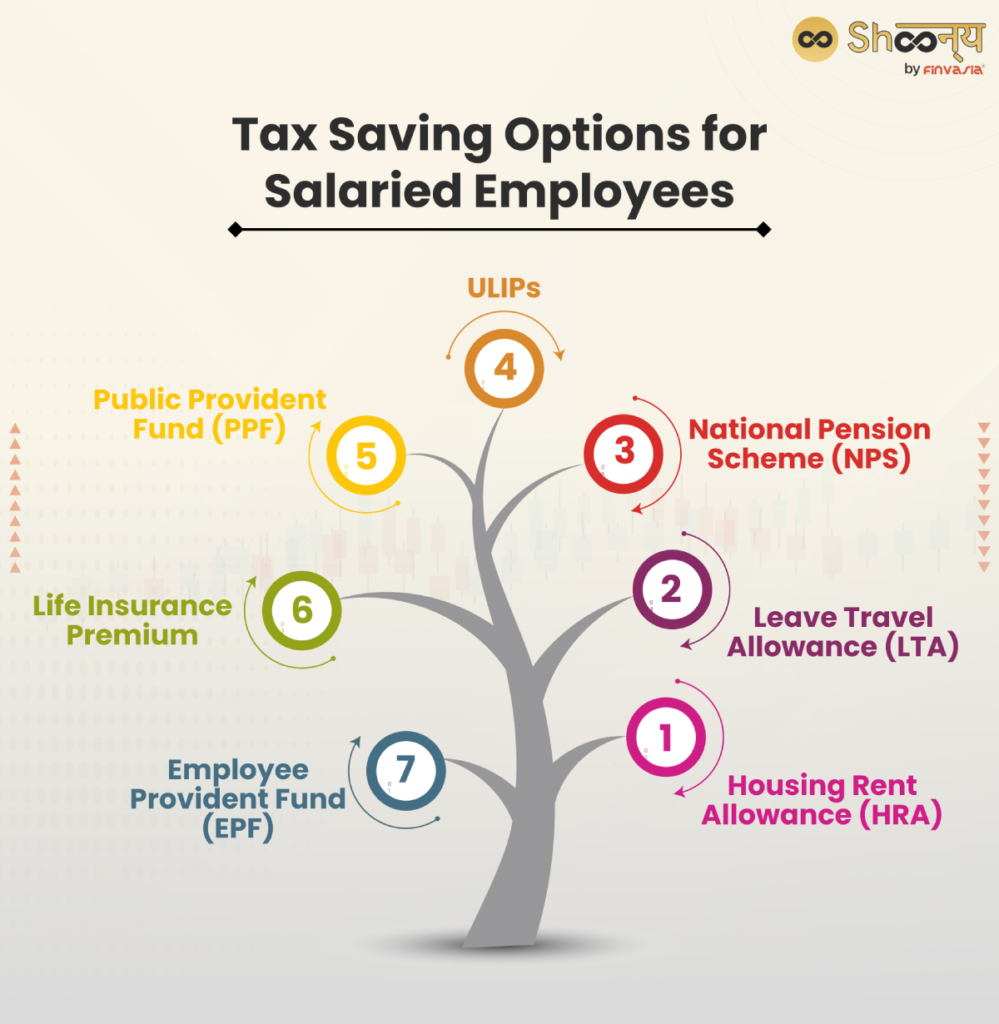
Many employers offer salary components or benefits that may improve tax efficiency, depending on applicable rules and your salary structure.
Examples may include:
- Retirement contributions.
- Health-related benefits.
- Leave-related benefits.
- Approved allowances.
- Flexible benefit plans.
Review your salary structure carefully and discuss available options with your employer or HR department.
5. Plan Retirement Contributions
Retirement savings not only strengthen long-term financial security but may also provide tax advantages where permitted under current regulations.
Starting retirement planning early allows investments more time to benefit from long-term growth.
6. Keep Proper Financial Records
Maintain organised records of:
- Salary statements.
- Tax deduction certificates.
- Investment documents.
- Insurance receipts.
- Loan statements.
- Donation receipts.
- Medical expense records where relevant.
Good documentation simplifies return filing and supports accurate tax reporting.
7. File Your Income Tax Return on Time
Even when tax has already been deducted at source, filing your return on time helps:
- Avoid penalties where applicable.
- Claim eligible refunds.
- Maintain financial records.
- Support future loan applications.
- Demonstrate financial compliance.
Timely filing is an important part of responsible financial management.
Common Tax Planning Mistakes
Many salaried professionals unintentionally reduce the effectiveness of their tax planning by making avoidable mistakes:
Investing Only to Save Tax
Some individuals purchase financial products solely because they offer tax benefits without considering suitability, liquidity, or long-term returns.
Waiting Until Year-End
Rushed investment decisions often lead to unsuitable financial products or missed opportunities.
Ignoring Tax Law Changes
Tax rules evolve regularly. Staying informed helps ensure your financial plan remains effective.
Not Reviewing Salary Structure
Employees sometimes overlook legitimate benefits or allowances available through their employer.
Poor Record Keeping
Missing documentation can complicate tax filing and delay refunds.
Practical Tips for Smarter Tax Planning
To build a more effective tax strategy:
- Review your finances at the beginning of each financial year.
- Set clear savings and investment goals.
- Compare available tax regimes where applicable.
- Invest consistently throughout the year.
- Maintain organised financial records.
- Review tax law updates regularly.
- Seek professional advice when your financial situation becomes more complex.
Tax planning should complement your overall financial strategy—not replace it.

How Our Blog Helps You Achieve Your Financial Goals
Tax rules, investment products, and financial regulations can often seem confusing. Our blog simplifies these topics by providing practical, evidence-based guidance designed for everyday professionals.
By following our articles, you’ll learn how to:
- Understand income tax concepts clearly.
- Improve budgeting and cash flow management.
- Compare tax-efficient savings and investment options.
- Build emergency and retirement funds.
- Understand banking, investing, and insurance products.
- Stay informed about changes in financial regulations.
- Avoid common personal finance mistakes.
- Develop long-term wealth-building strategies.
Our goal is to help readers make informed financial decisions through reliable education rather than last-minute financial planning.
Smart Tax Planning Supports Long-Term Wealth
Paying taxes is an important civic responsibility, but paying more tax than legally required because of poor planning can limit your financial progress. Effective tax planning is not about complicated strategies or aggressive tax reduction—it is about understanding the rules, making informed financial decisions, and aligning your savings, investments, and retirement planning with your long-term objectives. When tax planning becomes part of your overall financial strategy, every pound—or in India, every rupee—you save legally can be redirected towards building a stronger financial future.
Conclusion
Tax planning is one of the most valuable financial skills every salaried professional can develop. By understanding the available tax regime, planning investments early, organising financial records, making informed investment decisions, and staying updated with changing tax regulations, you can legally reduce your tax burden while improving your long-term financial wellbeing. Our blog is committed to helping you simplify personal finance through trusted insights, practical strategies, and evidence-based guidance that empowers you to make smarter financial decisions throughout the year, so have you started planning your taxes today to secure a stronger financial future tomorrow?
- Organisation for Economic Co-operation and Development (OECD). Financial Education and Financial Literacy: https://www.oecd.org/finance/financial-education/
- Income Tax Department of India. Official e-Filing Portal and Taxpayer Services: https://www.incometax.gov.in/
- World Bank. Governance and Public Finance Resources: https://www.worldbank.org/