
Common Investment Mistakes and How to Avoid Them
The Investment That Taught Daniel an Expensive Lesson
When Daniel received his annual bonus, he was determined to grow his money quickly. Social media was filled with stories of people doubling their investments in a matter of months, and a friend recommended a “can’t-miss” stock that everyone seemed to be talking about. Without researching the company or considering the risks, Daniel invested most of his savings into that single stock.
For a few weeks, the investment performed well, and he felt confident he had made the right decision. Then, unexpected news caused the company’s share price to fall sharply. Panic set in, and Daniel sold his investment at a significant loss. Months later, he realised his biggest mistake wasn’t choosing the wrong stock—it was investing without a plan, letting emotions guide his decisions, and expecting quick profits rather than focusing on long-term financial goals.
Countless investors share Daniel’s experience. Successful investing isn’t about avoiding every mistake; it’s about recognising common pitfalls and developing habits that help you make informed, disciplined decisions.
Why Avoiding Investment Mistakes Matters
Investing is one of the most effective ways to build long-term wealth, prepare for retirement, and achieve important financial goals. However, even experienced investors make mistakes that can reduce returns or expose them to unnecessary risk.
Understanding these mistakes can help you:
- Protect your hard-earned money.
- Make more informed investment decisions.
- Reduce emotional decision-making.
- Build long-term financial confidence.
- Improve your chances of achieving financial goals.
Learning what not to do is often just as valuable as learning successful investment strategies.
What the Research Says
Evidence from respected financial organisations highlights why investor behaviour matters:
- According to the Organisation for Economic Co-operation and Development (OECD), individuals with higher financial literacy are more likely to diversify investments, plan for the long term, and avoid risky financial decisions.
- The Financial Industry Regulatory Authority (FINRA) Investor Education Foundation has found through its National Financial Capability Study that financially knowledgeable investors generally make better financial decisions and are less likely to engage in costly financial behaviours.
- The Investment Company Institute (ICI) reports that millions of households invest through diversified funds to pursue long-term goals such as retirement and education, reinforcing the importance of disciplined, long-term investing.
These findings show that knowledge, patience, and discipline often have a greater impact on investment success than attempting to predict short-term market movements.
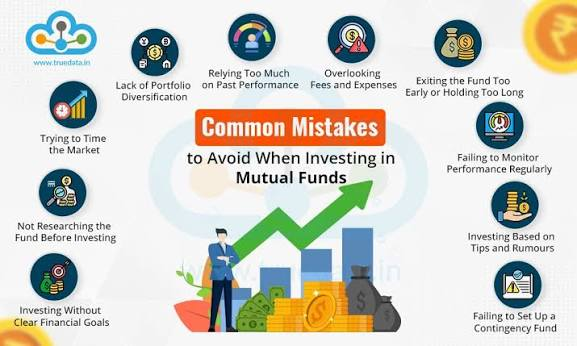
1. Investing Without Clear Financial Goals
Many beginners invest simply because they hear others discussing the stock market.
Without specific objectives, it becomes difficult to choose appropriate investments or measure progress.
How to avoid it:
Establish clear financial goals before investing, such as:
- Buying a home
- Building retirement savings
- Funding children’s education
- Creating passive income
- Achieving financial independence
Your investment strategy should always support your personal financial objectives.
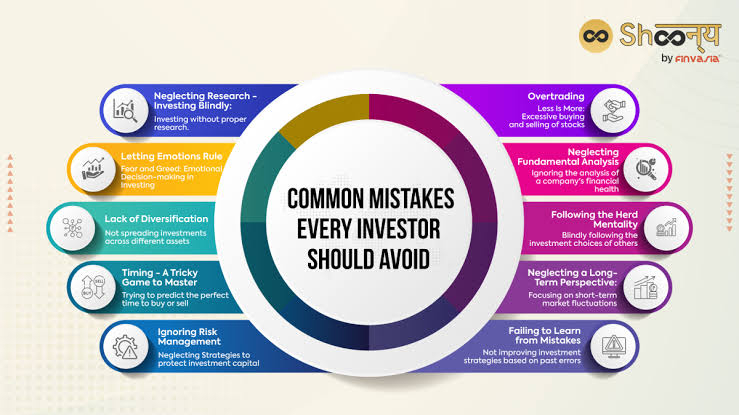
2. Trying to Time the Market
Many investors believe they can consistently buy at the lowest prices and sell at the highest prices.
In reality, accurately predicting short-term market movements is extremely difficult, even for professional investors.
How to avoid it:
Focus on long-term investing and make regular contributions instead of trying to predict market highs and lows.
3. Ignoring Diversification
Investing all your money in one company, industry, or asset class exposes you to unnecessary risk.
If that investment performs poorly, your entire portfolio may suffer.
How to avoid it:
Diversify across:
- Different companies
- Multiple industries
- Various geographic regions
- Different asset classes where appropriate
Diversification helps reduce company-specific risk, although it cannot eliminate market risk entirely.
4. Letting Emotions Drive Decisions
Fear and greed are among the biggest enemies of successful investing.
Many investors buy during periods of excitement and sell during market downturns, locking in losses unnecessarily.
How to avoid it:
Create a long-term investment plan and avoid making decisions based solely on headlines or short-term market volatility.
5. Ignoring Investment Costs
Management fees, trading commissions, and other charges may seem small individually but can significantly reduce long-term returns.
How to avoid it:
Compare fees before investing and understand the total cost of ownership for each investment product.
6. Failing to Research Investments
Some investors purchase shares based on social media trends, rumours, or recommendations from friends without understanding the underlying business.
How to avoid it:
Research:
- Company performance
- Financial statements
- Business model
- Industry outlook
- Potential risks
Always make investment decisions based on reliable information rather than speculation.
7. Expecting Quick Profits
Many beginners believe investing is a fast way to become wealthy.
Successful investing usually requires patience, consistency, and realistic expectations.
How to avoid it:
Think in years or decades rather than days or weeks.
Long-term investing has historically rewarded disciplined investors more consistently than short-term speculation.
8. Neglecting Regular Portfolio Reviews
While constant trading can be harmful, completely ignoring your investments isn’t ideal either.
Financial goals and market conditions change over time.
How to avoid it:
Review your portfolio periodically to ensure it remains aligned with your objectives, risk tolerance, and investment horizon.
9. Investing Money You May Need Soon
Using short-term savings for long-term investments can force you to sell during unfavourable market conditions.
How to avoid it:
Keep an emergency fund and money needed for near-term expenses separate from your investment portfolio.
10. Stopping Your Financial Education
Financial markets evolve continuously.
New products, regulations, and economic conditions require ongoing learning.
How to avoid it:
Continue improving your financial knowledge through trusted educational resources and evidence-based financial guidance.
Common Challenges New Investors Face
Many people struggle with investing because they experience:
- Fear of losing money
- Information overload
- Limited financial knowledge
- Emotional reactions to market volatility
- Unrealistic expectations
- Difficulty understanding investment products
- Conflicting financial advice online
These challenges are common, but they become easier to manage through education and a disciplined investment approach.
How Our Blog Helps You Become a Better Investor
Navigating the world of investing can feel overwhelming, particularly if you’re just starting your financial journey. Our blog is dedicated to helping readers understand investing through practical, easy-to-follow guidance backed by trusted financial information.
By following our articles, you’ll learn how to:
- Build realistic financial goals
- Understand investment fundamentals
- Compare stocks, ETFs, and mutual funds
- Create diversified investment portfolios
- Reduce unnecessary investment risk
- Avoid costly beginner mistakes
- Understand inflation, interest rates, and market cycles
- Build confidence as a long-term investor
Rather than promoting speculation or unrealistic returns, we focus on helping readers make informed financial decisions that support sustainable wealth creation.
Investing Success Is Built One Decision at a Time
Every successful investor has made mistakes at some point. What separates successful investors from unsuccessful ones is their willingness to learn, remain patient, and stay committed to a long-term strategy. Markets will rise and fall, economic conditions will change, and uncertainty will always exist. However, disciplined investing, continuous learning, and thoughtful decision-making have consistently proven more valuable than chasing short-term opportunities.
Conclusion
Investment mistakes are a natural part of every investor’s journey, but they don’t have to define your financial future. By understanding common pitfalls such as emotional investing, poor diversification, unrealistic expectations, and inadequate research, you can make more informed decisions and build a stronger foundation for long-term wealth creation. Our blog is committed to helping you improve your financial knowledge through trusted insights, practical strategies, and evidence-based guidance that supports every stage of your investment journey. Which investment mistake will you avoid today to build a more secure financial future?
- Organisation for Economic Co-operation and Development (OECD). Financial Education and Financial Literacy: https://www.oecd.org/finance/financial-education/
- FINRA Investor Education Foundation. National Financial Capability Study: https://www.finrafoundation.org/national-financial-capability-study
- Investment Company Institute (ICI). 2024 Investment Company Fact Book: https://www.ici.org/research/stats/factbook