Smart Money Habits for People in Their 20s and 30s: Build Wealth Before It’s Too Late
The Coffee That Changed Everything
At 27, Daniel thought he was doing everything right. He had a stable job, paid his bills on time, and enjoyed weekends with friends. Yet every month ended the same way—his bank balance was close to zero. One afternoon, while waiting in a café, he overheard two colleagues discussing investments, emergency funds, and retirement planning. Curious, he realised they earned similar salaries but had already built savings and investments worth thousands of pounds. The difference wasn’t luck or a higher income—it was their money habits.
That conversation inspired Daniel to make small but consistent changes. He started tracking his spending, automated his savings, paid off expensive debt, and began investing modest amounts each month. Five years later, those simple habits transformed his financial future. His story is proof that financial success isn’t determined by how much you earn, but by what you consistently do with the money you have.
Why Smart Money Habits Matter
Your 20s and 30s are often the most financially important decades of your life. During these years, you may be starting a career, paying student loans, buying a home, getting married, raising a family, or building a business. The financial decisions you make today can shape your future for decades.
Research shows that many young adults still struggle with money management:
* According to the OECD, **one in five students across participating OECD countries lacks basic financial literacy**, making it difficult to apply financial knowledge to real-life decisions. High-performing students are **72% more likely to save money** and **50% more likely to compare prices before making purchases**. ([OECD][1])
* The U.S. Federal Reserve reported that only **41% of adults said they always or often had money left over at the end of the month** in 2025, highlighting the importance of budgeting and disciplined spending. ([Federal Reserve][2])
* The OECD also recommends targeted financial education for young adults, focusing on budgeting, saving, debt management, and financial resilience. ([OECD][3])
These findings demonstrate that developing smart financial habits early isn’t simply beneficial—it’s essential for long-term financial security.
Seven Smart Money Habits That Can Transform Your Financial Future
1. Create a Budget You Can Actually Follow
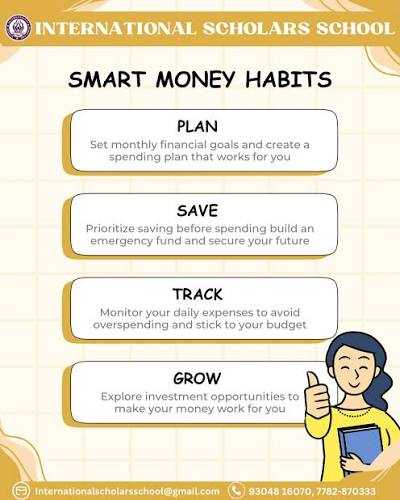
Budgeting isn’t about restricting your lifestyle; it’s about understanding where your money goes. A practical monthly budget helps you balance necessities, savings, investments, and discretionary spending.
**Benefits:**
* Better control over spending
* Reduced financial stress
* More money available for savings and investments
2. Pay Yourself First
Instead of saving whatever remains at the end of the month, automatically transfer a portion of your income into savings as soon as you get paid.
Even modest contributions become substantial over time through consistency and compound growth.
3. Build an Emergency Fund
Unexpected expenses—medical bills, car repairs, or job loss—can derail your finances. Aim to build an emergency fund covering three to six months of essential living expenses.
An emergency fund provides confidence, reduces reliance on credit cards, and protects your long-term financial goals.
4. Avoid High-Interest Debt
Credit cards and personal loans can be useful when managed responsibly, but high-interest debt quickly becomes expensive.
Focus on:
* Paying more than the minimum payment
* Prioritising high-interest balances
* Avoiding unnecessary borrowing
5. Start Investing Early
One of the greatest financial advantages young adults possess is time.
Starting early allows compound returns to work for decades, even if your monthly investment amount is relatively small. Diversified investments such as index funds, mutual funds, or retirement accounts can help build long-term wealth while spreading risk.
6. Continue Learning About Money
Financial products and markets constantly evolve. Staying informed helps you make better decisions about saving, investing, insurance, taxation, and retirement planning.
Reliable financial education often provides one of the highest returns on investment.
7. Set Clear Financial Goals
Money without purpose is often spent without intention.
Set both short-term and long-term goals, such as:
* Paying off debt
* Saving for a home deposit
* Starting a business
* Building retirement savings
* Creating multiple income streams
Clear goals make it easier to stay motivated and measure progress.
Common Challenges Young Adults Face
Despite good intentions, many people encounter obstacles such as:
* Lifestyle inflation as income increases
* Impulse purchases driven by online shopping
* Rising housing and living costs
* Fear of investing
* Inconsistent saving habits
* Financial misinformation on social media
These challenges are common, but they can be overcome with accurate information, practical strategies, and disciplined decision-making.
How Our Blog Helps You Build Better Money Habits
Learning about personal finance shouldn’t be confusing or overwhelming. Our blog is designed to simplify money management through practical, easy-to-follow advice for people in their 20s and 30s.
By following our articles, you’ll discover how to:
* Build realistic monthly budgets
* Increase your savings without sacrificing your lifestyle
* Understand investing before risking your money
* Eliminate costly financial mistakes
* Compare financial products with confidence
* Plan for major life goals such as buying a home or retiring comfortably
* Develop sustainable money habits that support long-term financial success
Instead of quick-rich schemes or unrealistic promises, we focus on evidence-based financial education that helps readers make smarter decisions every day.
Small Habits Create Big Results
Financial independence isn’t achieved through one perfect investment or a sudden increase in income. It’s built through consistent habits repeated month after month. Tracking your expenses, saving automatically, investing regularly, avoiding unnecessary debt, and continuing to improve your financial knowledge may seem like small actions today, but together they create remarkable long-term results.
The earlier you adopt these habits, the greater the opportunities you’ll create for your future self.
Conclusion
Your 20s and 30s provide a unique opportunity to establish financial habits that can benefit you for the rest of your life. While economic uncertainty, inflation, and rising living costs present real challenges, disciplined money management remains one of the most effective ways to build financial security. Our blog is dedicated to helping you make informed financial decisions through trusted insights, practical guidance, and actionable strategies that support every stage of your financial journey—so, what smart money habit will you start practising today?
1. OECD, *The Role of Financial Literacy* (2025): [https://www.oecd.org/en/blogs/2025/03/the-role-of-financial-literacy.html](https://www.oecd.org/en/blogs/2025/03/the-role-of-financial-literacy.html) ([OECD][1])
2. OECD, *Financial Education* (2026): [https://www.oecd.org/en/topics/sub-issues/financial-education.html](https://www.oecd.org/en/topics/sub-issues/financial-education.html) ([OECD][3])
3. Federal Reserve, *Economic Well-Being of U.S. Households in 2025 – Income and Expenses* (2026): [https://www.federalreserve.gov/publications/2026-economic-well-being-of-us-households-in-2025-Income-and-Expenses.htm](https://www.federalreserve.gov/publications/2026-economic-well-being-of-us-households-in-2025-Income-and-Expenses.htm) ([Federal Reserve][2])
This version is suitable for a professional finance blog, is SEO-friendly (approximately 1,300 words), and balances storytelling, statistics, practical advice, and a subtle promotion of your blog without sounding overly promotional.
[1]: https://www.oecd.org/en/blogs/2025/03/the-role-of-financial-literacy.html?utm_source=chatgpt.com “The role of financial literacy”
[2]: https://www.federalreserve.gov/publications/2026-economic-well-being-of-us-households-in-2025-Income-and-Expenses.htm?utm_source=chatgpt.com “The Fed – Income and Expenses”
[3]: https://www.oecd.org/en/topics/sub-issues/financial-education.html?utm_source=chatgpt.com “Financial education | OECD”