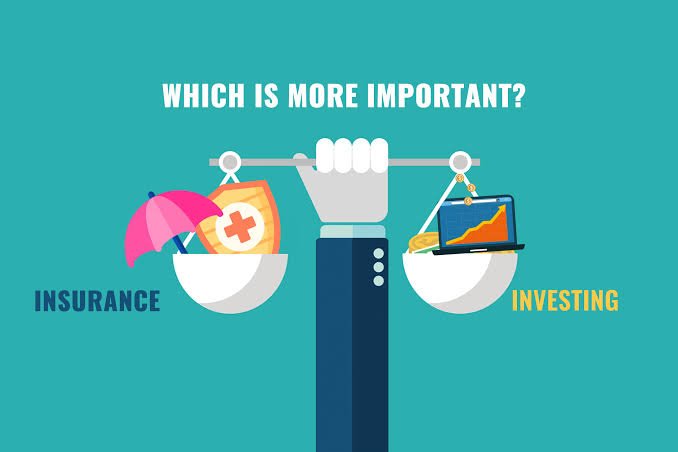
Insurance vs Investment: Know the Difference
The Decision That Changed Ananya’s Financial Future
When Ananya received her first annual bonus, she wanted to make the smartest financial decision possible. Her parents encouraged her to buy a life insurance policy for financial protection, while her colleagues suggested investing the money in mutual funds to build wealth. Confused, she wondered, “Should I choose insurance or investment?”
After speaking with a financial adviser and researching the topic, Ananya realised she had been asking the wrong question. Insurance and investments are not competing financial products—they serve entirely different purposes. Insurance protects you and your family from unexpected financial losses, while investments help your money grow over time to achieve long-term financial goals.
Instead of choosing one over the other, Ananya built a balanced financial plan that included both adequate insurance cover and diversified investments. She gained peace of mind knowing her family would be financially protected while also working towards goals such as buying a home and retiring comfortably.
If you’ve ever struggled to decide between insurance and investing, understanding their distinct roles is one of the most important steps towards financial security.
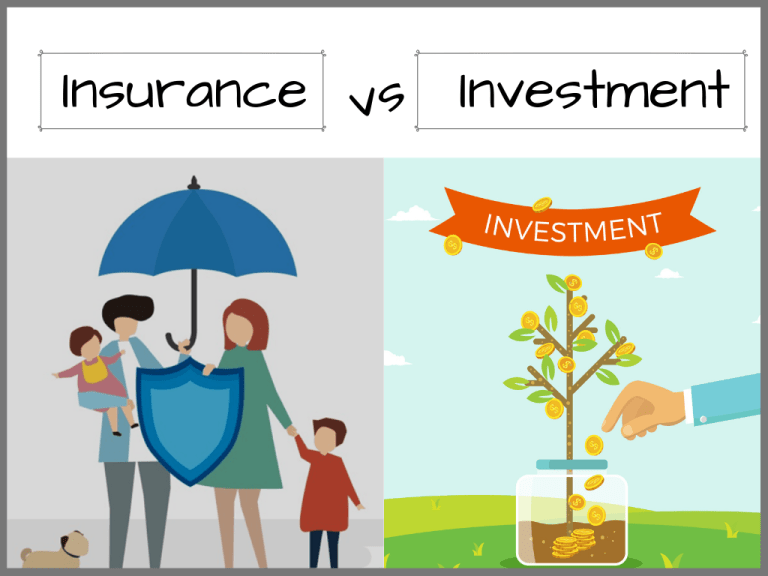
What Is Insurance?
Insurance is a financial product designed to protect against specific risks. In exchange for paying a regular premium, the insurance company agrees to compensate you or your beneficiaries if a covered event occurs.
Common types of insurance include:
- Life insurance
- Health insurance
- Motor insurance
- Home insurance
- Travel insurance
- Personal accident insurance
- Critical illness insurance
The primary purpose of insurance is financial protection, not wealth creation.
What Is an Investment?
An investment involves allocating money to financial assets with the expectation of generating returns over time.
Common investment options include:
- Mutual funds
- Exchange-Traded Funds (ETFs)
- Shares (stocks)
- Bonds
- Fixed Deposits
- Public Provident Fund (PPF)
- National Pension System (NPS)
- Real estate
Unlike insurance, investments are intended to help grow your wealth and achieve long-term financial goals.
Why Understanding the Difference Matters
Many people mistakenly purchase insurance expecting high investment returns or invest aggressively without protecting themselves against unexpected financial risks.
Understanding the difference helps you:
- Protect your family’s financial future.
- Build long-term wealth.
- Manage financial risk effectively.
- Avoid purchasing unsuitable financial products.
- Create a balanced financial plan.
The strongest financial plans typically include both adequate insurance and suitable investments.
What the Research Says
Several respected organisations emphasise the importance of financial protection and long-term investing:
- According to the Organisation for Economic Co-operation and Development (OECD), financially literate individuals are more likely to manage financial risks, purchase appropriate insurance, save regularly, and invest for long-term goals.
- The Insurance Regulatory and Development Authority of India (IRDAI) continues to promote greater insurance awareness and financial protection to improve financial resilience across Indian households.
- The World Bank’s Global Findex Database 2021 reports that increased access to formal financial services has expanded opportunities for saving, investing, and financial protection around the world.
These findings highlight that financial wellbeing depends on balancing both protection and wealth creation.
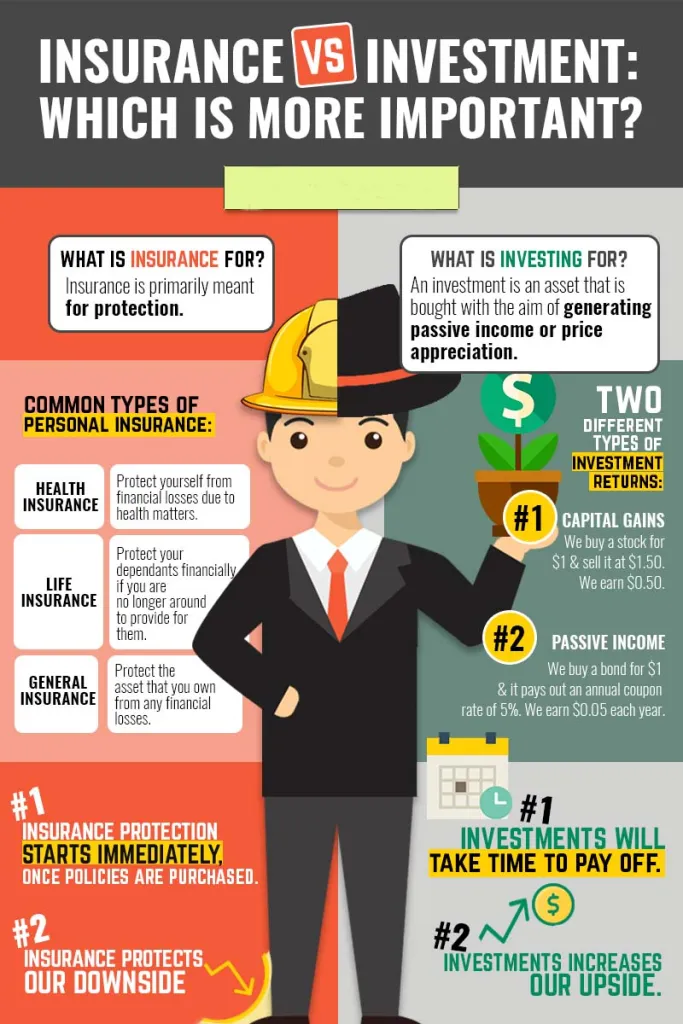
Insurance vs Investment: The Key Differences
| Feature | Insurance | Investment |
| Primary Purpose | Financial protection | Wealth creation |
| Main Objective | Reduce financial risk | Generate long-term returns |
| Returns | Usually not the primary objective | Primary objective |
| Risk | Protects against financial losses | Subject to varying levels of investment risk |
| Time Horizon | Based on policy term | Usually medium- to long-term |
| Liquidity | Depends on policy terms | Varies by investment product |
| Ideal For | Income protection and financial security | Achieving future financial goals |
Although both involve regular financial contributions, they solve different financial problems.
Benefits of Insurance
Financial Protection for Your Family
Life insurance can provide financial support to your dependants if you are no longer able to provide income due to death, depending on the policy terms.
Protection Against Medical Costs
Health insurance helps reduce the financial burden of hospitalisation, surgeries, and other eligible medical expenses.
Peace of Mind
Insurance allows individuals and families to prepare financially for unexpected events without relying entirely on savings.
Supports Long-Term Financial Stability
Unexpected events can significantly affect financial goals. Insurance helps reduce the impact of these risks.
Benefits of Investing
Builds Long-Term Wealth
Investments allow your money to grow through capital appreciation, interest, dividends, or other returns, depending on the asset.
Helps Beat Inflation
Cash held in low-interest accounts may lose purchasing power over time. Well-chosen long-term investments have the potential to outpace inflation, although returns are never guaranteed.
Supports Major Financial Goals
Investing helps individuals work towards:
- Buying a home
- Children’s education
- Retirement planning
- Financial independence
- Building passive income
Harnesses the Power of Compounding
Long-term investing enables returns to generate additional returns over time, helping accelerate wealth creation.
Common Mistakes People Make
Many individuals unintentionally weaken their financial plans by making these mistakes:
Buying Insurance Only as an Investment
The main purpose of insurance is protection. Purchasing insurance solely for investment returns may not align with your financial goals.
Investing Without Insurance
Building wealth without protecting your income or family exposes you to significant financial risks if unexpected events occur.
Being Underinsured
Choosing insufficient insurance cover may leave your family financially vulnerable.
Ignoring Long-Term Goals
Keeping all savings in low-return products may limit your ability to build wealth over time.
Not Reviewing Financial Plans
As income, family responsibilities, and financial goals change, insurance coverage and investments should be reviewed regularly.
How to Decide What You Need
Prioritise Insurance If You:
- Have dependants who rely on your income.
- Want protection against medical expenses.
- Have financial obligations such as loans.
- Need peace of mind against unexpected events.
Prioritise Investing If You:
- Want to grow your wealth.
- Are saving for retirement.
- Have long-term financial goals.
- Already have adequate financial protection.
Ideally, Use Both
A strong financial strategy usually combines:
- Emergency savings
- Appropriate insurance coverage
- Regular investments
- Retirement planning
- Diversified financial assets
Protection and wealth creation should work together—not replace one another.
Practical Tips for Building a Balanced Financial Plan
To strengthen your financial future:
- Build an emergency fund before making high-risk investments.
- Ensure you have adequate life and health insurance where appropriate.
- Invest regularly according to your financial goals and risk tolerance.
- Review both insurance policies and investment portfolios annually.
- Avoid making decisions based solely on tax benefits or sales pitches.
- Continue improving your financial knowledge.
A balanced approach helps prepare you for both opportunities and uncertainties.
How Our Blog Helps You Achieve Your Financial Goals
Financial products often appear similar, making it difficult to decide which ones truly meet your needs. Our blog simplifies complex financial topics by providing practical, evidence-based guidance that empowers readers to make informed decisions.
By following our articles, you’ll learn how to:
- Understand insurance and investment products.
- Build realistic financial plans.
- Compare savings, investment, and protection options objectively.
- Improve budgeting and money management.
- Retire confidently.
- Avoid common financial mistakes.
- Stay informed about changes in banking, taxation, and personal finance.
- Build lasting financial confidence.
Our mission is to transform financial knowledge into practical action that helps readers protect their families while achieving long-term financial success.
Financial Security Begins with the Right Balance
Insurance and investing are often viewed as competing choices, but they are complementary pillars of sound financial planning. Insurance protects everything you have worked hard to build, while investments help create the wealth you will need in the future. By balancing both according to your personal circumstances, you can reduce financial uncertainty, strengthen your resilience, and move confidently towards your long-term goals.
Conclusion
Insurance and investments serve different but equally important purposes in a healthy financial plan. Insurance provides financial protection against life’s uncertainties, while investments help grow your wealth and achieve long-term goals such as retirement, education, or home ownership. Rather than choosing one over the other, combining adequate insurance with disciplined investing creates a stronger foundation for financial security and lasting prosperity. Our blog is dedicated to helping you understand personal finance through trusted insights, practical strategies, and evidence-based guidance that empowers you to make smarter financial decisions, so have you built the right balance between protecting your future and growing your wealth?
- Organisation for Economic Co-operation and Development (OECD). Financial Education and Financial Literacy: https://www.oecd.org/finance/financial-education/
- Insurance Regulatory and Development Authority of India (IRDAI). Consumer Education and Insurance Awareness: https://www.irdai.gov.in/
- World Bank. Global Findex Database 2021: https://www.worldbank.org/en/publication/globalfindex